The Masonic Apron Guide to Types, Degrees, and What to Buy
Lambskin versus cloth, plain versus embroidered, Blue Lodge versus Chapter versus Commandery, what each apron is for, when to buy one, and how not to waste money.
The apron is the badge of a Mason and the one piece of regalia every member owns. It is also where the most money gets wasted, because men buy the wrong one before they know what they need.
Before anything: do not buy one yet
If you are a candidate, or you have not been raised, wait.
The Lodge provides an apron for your degrees. Most jurisdictions present you with a plain white apron to keep at some point in the process. Buying regalia before you are entitled to wear it is the most common new-candidate mistake, and buying a decorated apron before you know your jurisdiction’s pattern is how you end up with a drawer ornament.
If you are buying a gift for a candidate, buy something else. Buy the apron after he is raised, or better, buy him the case.
The plain white apron
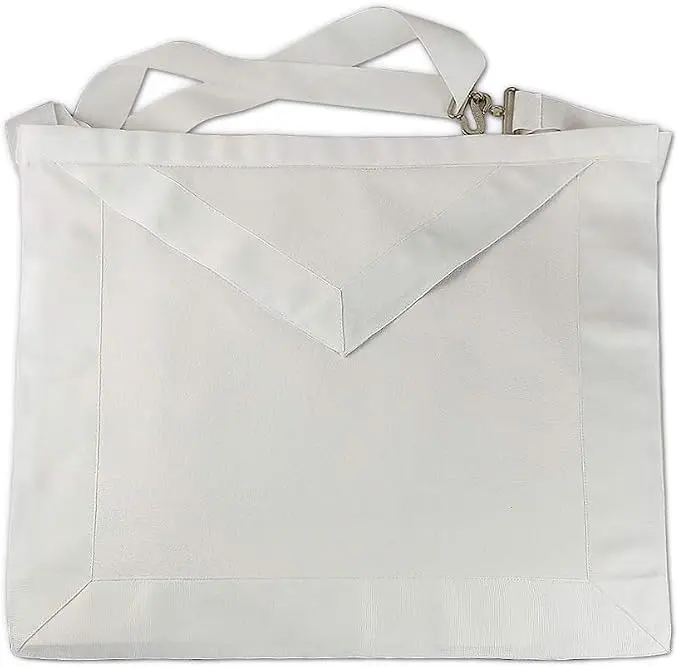
The one every Mason gets, and in many jurisdictions the one he is buried in.
Traditionally lambskin: actual leather, white, with a square body and a triangular flap. The lambskin is not decorative; the material itself carries the symbolism of innocence, and that is why every Mason is presented with one regardless of what he buys later.
Cloth versions exist and are cheaper. For a working apron that gets folded into a case and carried to meetings for thirty years, real lambskin is worth the difference. For a spare that lives in the trunk, cloth is fine.
What to look for: genuine lambskin rather than “leatherette”, clean unfrayed edges, and hardware (the belt, buckle, or tie) that will not fail. A snake-chain belt with a metal clasp outlasts a cotton tie by decades.
Master Mason aprons
Once raised, most Masons buy a better apron. The common upgrades:
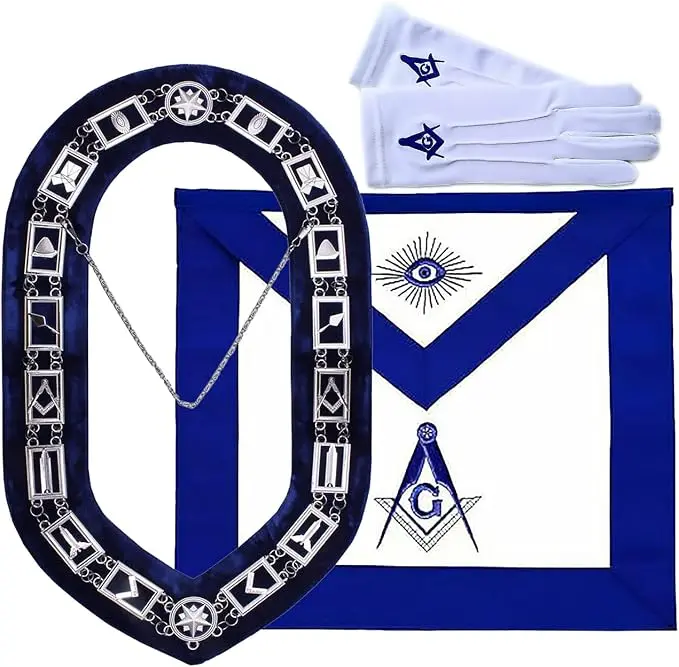
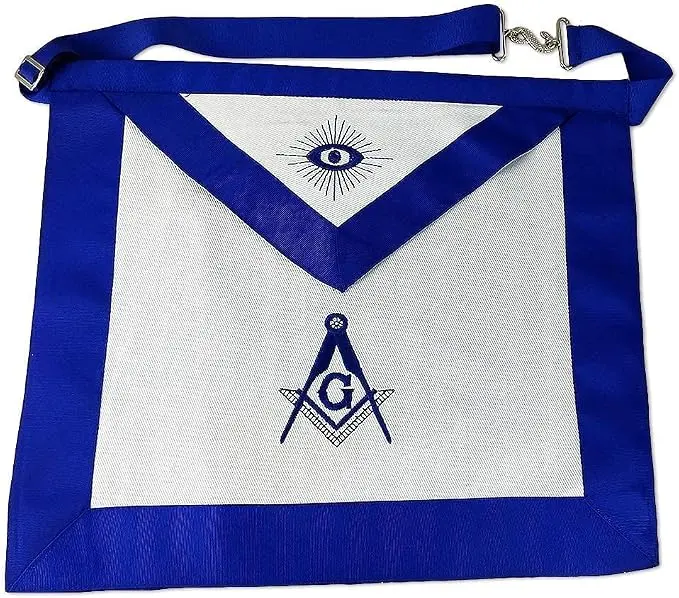
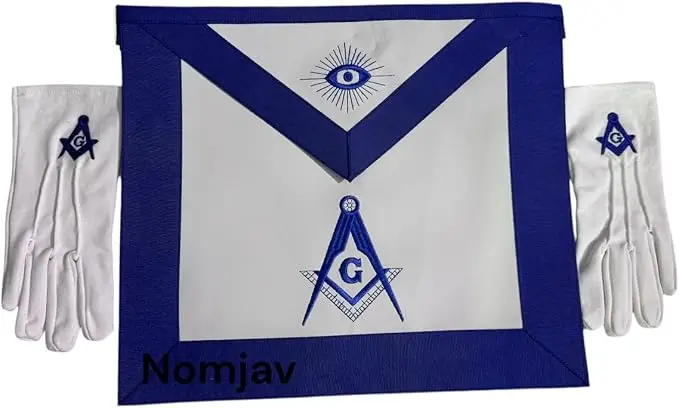
- Embroidered with the square and compasses, sometimes with the Lodge name and number.
- Trimmed in the colors of the jurisdiction: Blue Lodge trim is usually light blue, but this is exactly the kind of thing that varies.
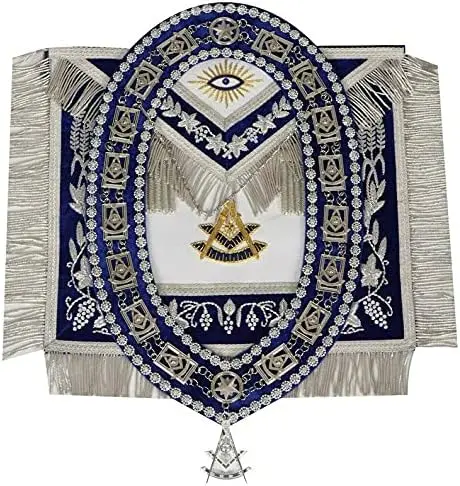
- Bullion work: hand-embroidered metallic thread. Expensive, heavy, and genuinely beautiful.
Check your jurisdiction’s pattern first. Apron design is set locally: trim color, whether rosettes or tassels are used, what may be embroidered on it. An apron correct in one state can be plainly wrong in the next, and no vendor listing will tell you that. Ask your Secretary or look at what the men in your Lodge actually wear.
Past Master aprons
Worn by a Brother who has served as Worshipful Master, and carrying the past master emblem of the jurisdiction.
Only if you have sat in the East. This is not negotiable and the room will notice.
Officer aprons and collars
Usually Lodge property, not personal property. The Lodge owns a set, they are passed to whoever holds the office, and they stay with the Lodge.
Do not buy one without asking. You may be buying a duplicate of something already in the closet, and in some jurisdictions wearing a personally-owned officer apron is itself irregular.
Aprons for the other bodies
Each appendant body has its own, and they are not interchangeable:
- Royal Arch Chapter: Capitular apron, typically with the triple tau.
- Cryptic Council: with the trowel emblem.
- Commandery: no apron in the Craft sense; the Knights Templar wear a uniform.
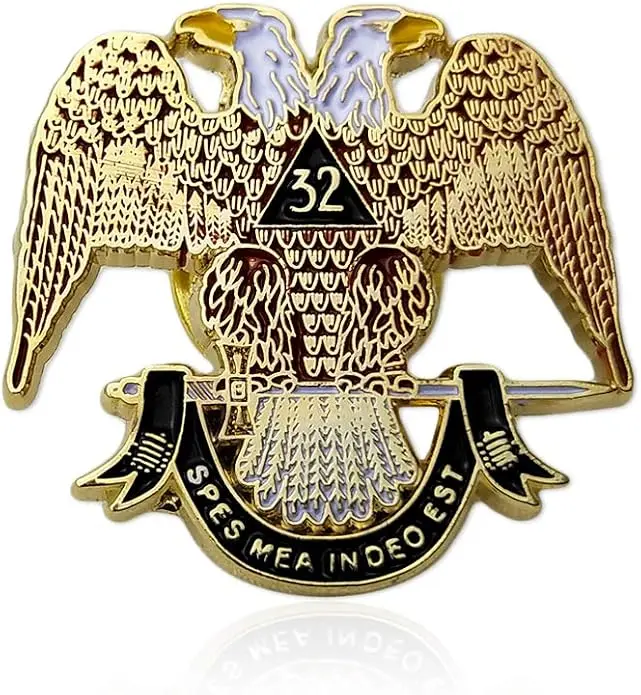
- Scottish Rite: varies by degree and by jurisdiction; the Valley will tell you what is worn.
- Eastern Star: its own pattern entirely.
Same rule: join first, look around, then buy.
Cases
The single most underrated purchase in Masonry.
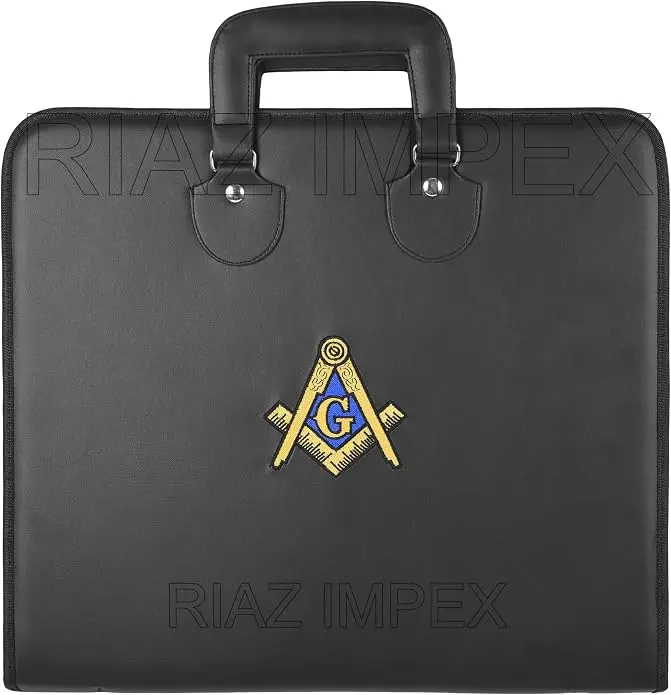
An apron folded into a briefcase for twenty years develops creases you cannot get out, and lambskin cracks along a hard fold. A proper apron case, a rigid or semi-rigid case sized to hold the apron flat or in a single gentle fold, is cheap insurance on a much more expensive item.
It is also the correct gift for a newly raised Mason, precisely because it is the thing he will not think to buy himself.
What to actually spend
- Plain lambskin working apron: the everyday one. Buy real leather.
- One good embroidered apron: for installations and visits, once you know your jurisdiction’s pattern.
- A case: immediately.
- Everything else: later, and only after you have seen what your Lodge actually wears.
Browse what is catalogued: aprons and regalia.
The standing caveat
Apron patterns, trim colors, and what may be embroidered are set by each Grand Lodge and vary considerably. This page describes the general landscape. Your Lodge Secretary is the authority for your jurisdiction. Ask him before you spend real money, not after.
![Past Master Masonic Apron - [Blue & White] — product photo](/images/products/past-master-masonic-apron-blue-white.webp)