The Working Tools of Freemasonry, Explained
The gauge, gavel, square, level, plumb, and trowel: what each tool means, which degree it belongs to, and why a fraternity of non-stonemasons still hands them out.
Freemasonry took its entire vocabulary from a trade nobody in the room practices. That is not an accident or a quirk: it is the method. A tool is a physical object with an obvious function, and attaching a moral lesson to it makes the lesson portable in a way a sermon is not.
Each degree presents its own set. Here is what they are and what they are said to mean.
First degree: Entered Apprentice
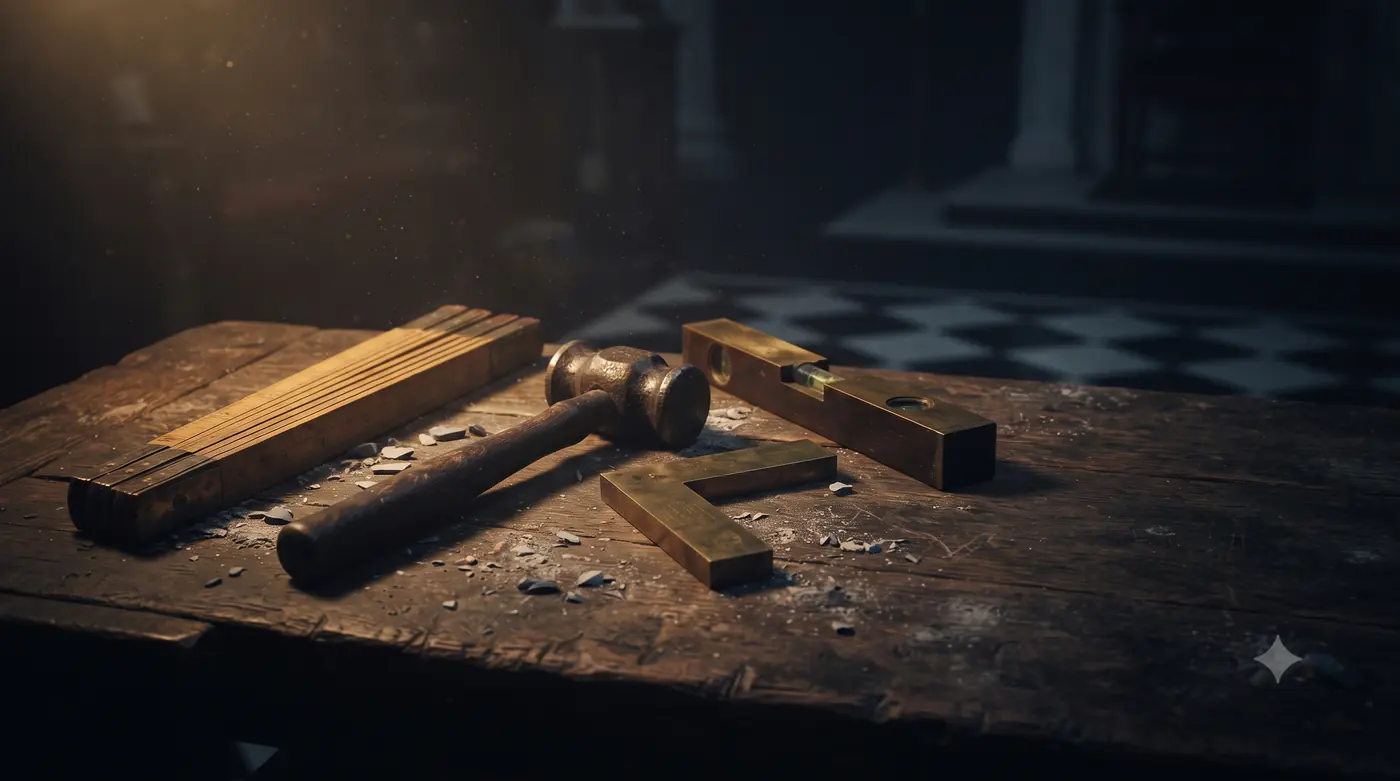
The twenty-four-inch gauge. A measuring rule, marked in twenty-four inches for the twenty-four hours of the day. The lesson is the division of time: a portion for work, a portion for rest and refreshment, a portion for service and for the study of what matters.
It is the most practical instruction in Masonry and the one most consistently ignored by the men who received it.
The common gavel. The stonemason’s hammer, used to break off the rough corners of a stone. The lesson is the removal of what does not belong: the vices and superfluities of life. You are the stone.
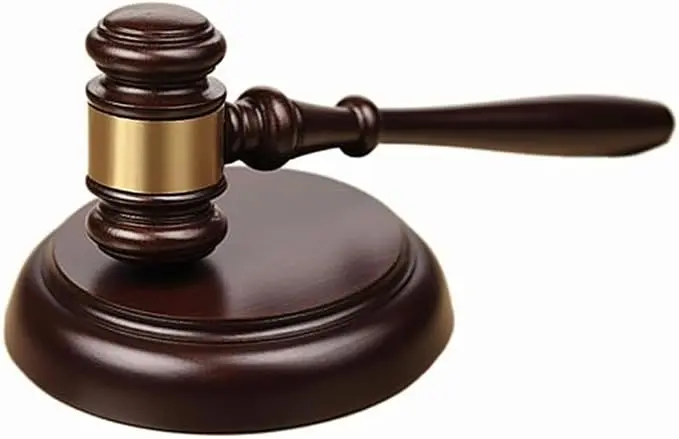
Note this is not the presiding officer’s gavel, which is a different object doing a different job; the Master’s gavel is an instrument of authority, and this one is an instrument of self-correction.
Second degree: Fellowcraft
The plumb. A weighted line that finds true vertical. Uprightness of conduct: walking upright before God and man.
The square. Two arms at a true right angle, used to test whether work is correct. Morality; squaring one’s actions. It is the reason “on the square” and “a square deal” are in ordinary English at all: both come out of the trade and then out of the fraternity.
The level. Finds true horizontal. Equality: all Masons meet on the level, regardless of what they are outside the room. The Lodge is the one place a man’s rank is left at the door.
The square, level, and plumb are also the jewels of the three principal officers, which is why they show up on the officers’ collars.
Third degree: Master Mason
The trowel. Used to spread cement and bind a structure into one mass. The lesson given is brotherly love and affection: the cement that unites a Lodge into one body.
A single tool for the highest degree, which is itself the point.
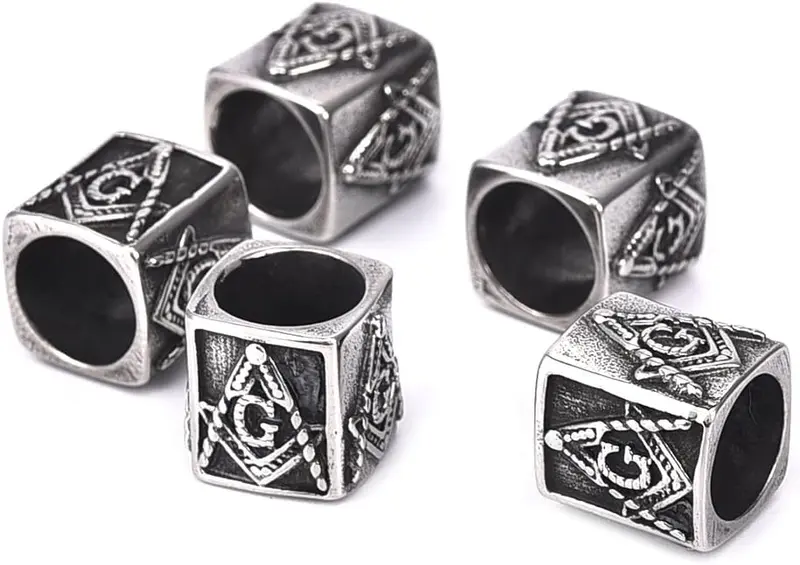
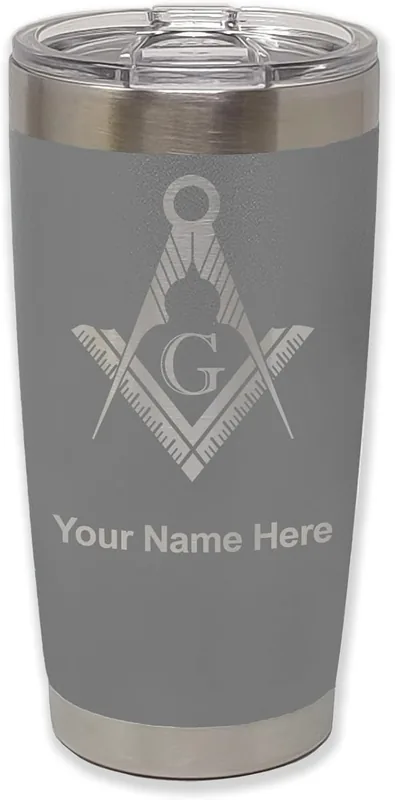
The square and compasses
Not a working tool in the technical sense; it is the emblem of the fraternity, and the compasses in particular belong to a different order of symbolism.
The square is the tool of the operative craft, applied to the material world and to conduct. The compasses are the instrument of the designer, used to draw boundaries and describe circles, and in Masonic teaching, to circumscribe desires and keep passions within due bounds.
The letter G in the American form of the emblem is generally read as standing for both Geometry (the science on which the operative craft rests) and for God, the Great Architect. Both readings are taught, often in the same breath.
The English form of the emblem usually omits the G. Neither is more correct.
Other symbols you will meet early
The rough and perfect ashlars. Two stones: one as it came from the quarry, one dressed and ready for the builder’s use. Between them is the entire program of Freemasonry.
The trestle board. The board on which the master draws the designs for the day’s work: the plan you work to.
The three great lights. The Volume of the Sacred Law, the square, and the compasses, arranged on the altar. The Volume varies by the faith of the members; a Lodge with men of several faiths may have several books open.
The pillars, the winding stair, the checkered pavement. All Fellowcraft material, and all of it worth more than the paragraph anyone gives it here.
Why the tools are still handed out
Because the method works.
Nobody remembers a lecture on time management. Everyone remembers being handed a twenty-four-inch rule and told what the twenty-four inches are for. That is a mnemonic technique older than the fraternity, and Masonry uses it relentlessly.
The tools also do real work in the Lodge room as objects. A Lodge owns a set, they are displayed and used in the degrees, and a good set is a real piece of equipment rather than a souvenir. See lodge supplies.
Reading further
The symbolism has a large and uneven literature: some of it excellent scholarship, some of it invented in the 19th century and repeated ever since. Ask an older member of your Lodge what to read before you buy anything; the books lane here catalogues the standard titles, including the notorious ones, but a recommendation from a Brother who has read them beats any listing.