Masonic Myths, Answered Honestly
The Illuminati, the pyramid on the dollar, world government, goats, blood oaths, and whether they really run everything. Each one taken seriously and answered plainly.
Freemasonry has attracted conspiracy theories for three hundred years, which is roughly as long as it has existed in its modern form. Some of the claims are ridiculous. A few have a real historical grain in them, and pretending otherwise is worse than useless.
Here they are, straight.
“Freemasons are the Illuminati”
No, and this one has a specific answer.
The Bavarian Illuminati was a real organization, founded in 1776 by Adam Weishaupt, an Enlightenment secret society with political aims. It recruited partly from Masonic lodges, and that connection is genuine and it is the seed of everything since. It was suppressed by the Bavarian government in the 1780s and it did not survive.
What survived was the panic about it, which fed straight into a century of European conspiracy literature and never really stopped. When someone today says “Illuminati,” they are downstream of an 18th-century moral panic about a club that lasted a decade.
Masons find the association tiresome mostly because it is repetitive. It is the joke every one of them has heard several hundred times.
“The eye on the dollar bill is Masonic”
The eye in a triangle, radiating light, is a genuine piece of Masonic iconography: the All-Seeing Eye. It is also a piece of common 18th-century Christian and Enlightenment iconography that appeared in art, churches, and civic design across Europe well before and entirely apart from Freemasonry.
The Great Seal of the United States was designed by committees between 1776 and 1782. Of the men on those committees, the Masonic membership is limited: Franklin was a Mason; several of the other principal designers were not. The eye-and-pyramid design came from the third committee’s consultant, Charles Thomson, drawing on standard heraldic and emblematic sources.
So: the symbol is shared, not stolen, and the design’s origins are documented. It is not a Masonic signature on the currency.
“They run the world”
If you have ever attended a Lodge meeting you will find this one hard to sustain.
A Lodge is a volunteer organization that struggles to fill its officer line, argues about the roof, and sends three reminder emails to get a quorum. Grand Lodges are sovereign per state and per country and do not coordinate internationally: there is no world Masonic authority, and attempts to create one have failed repeatedly.
The grain of truth: Masons have been disproportionately represented in some institutions at some times, particularly in 18th- and 19th-century Britain and America, and in colonial administration. When a large share of a society’s professional class belongs to the same club, that club shows up in the record. That is a sociological fact about who joined, not evidence of a directing hand.
“They worship the Devil”
No. This particular accusation has a traceable origin, and it is worth knowing.
In the 1880s and 1890s a French writer, Léo Taxil, published an elaborate series of exposés claiming Masonic devil-worship, complete with a fictitious high priestess. It was enormously successful and widely believed, including in senior church circles. In 1897 Taxil called a press conference and announced that he had invented all of it as a hoax at the expense of the Catholic Church.
The retraction did not travel nearly as far as the accusation. Most modern claims about Masonic Satanism trace, sometimes through several intermediaries, to material Taxil admitted he made up.
Freemasonry requires belief in a Supreme Being and refers to God as the Great Architect of the Universe, a deliberately non-sectarian formulation so men of different faiths can sit together. It has no theology and no worship in the religious sense.
“The Catholic Church banned it, so there must be something to it”
The Church’s opposition is real and long-standing, beginning with Clement XII in 1738 and reaffirmed since, most recently in 1983 by the Congregation for the Doctrine of the Faith, which held that Catholics who join remain in a state of grave sin.
The stated reasons are about religious indifferentism, oaths, and secrecy, not about devil worship. Whatever you make of the theology, the objection is a coherent institutional one, and pointing to it as evidence of occult wickedness misrepresents what was actually said.
“There are blood oaths”
The obligations taken in the degrees include traditional penalties expressed in vivid physical language. This is real, it is in the published rituals, and Masons do not deny it.
What it is: archaic symbolic language, inherited from the operative craft’s oath-taking tradition, understood by everyone in the room as symbolic. Nobody is harmed, nobody has ever been harmed by a Lodge for breaking an obligation, and several jurisdictions have modernized or softened the wording precisely because the imagery misleads outsiders.
“You ride a goat”
A joke Masons made about themselves, which outsiders took literally, which Masons then leaned into. There is a genuine tradition of Lodges owning novelty “riding the goat” props for banquets.
There is no goat.
“You have to be invited”
The exact opposite, and this is the most consequential misunderstanding on the page.
Freemasons are not permitted to solicit members. If you are waiting for an invitation you will wait forever. You have to ask. See how to join a Masonic Lodge.
“It’s just old men and free drinks”
Half fair. The average age is high, the fundraising is relentless, and a lot of Masonic life is administrative.
The other half: the charitable output is substantial and verifiable, from Shriners Children’s hospitals to the Scottish Rite’s childhood language centers to Pennsylvania’s Masonic Villages. And for a lot of men, a structured room where you meet people outside your own demographic, with a reason to keep showing up, is exactly the thing modern life stopped supplying.
Read the sources yourself
The rituals have been published, accurately and repeatedly, since the 1700s. Grand Lodges publish their constitutions, their finances, and their membership numbers. The scholarly literature, particularly the transactions of research lodges, is careful, footnoted, and openly skeptical of Masonry’s own mythology.
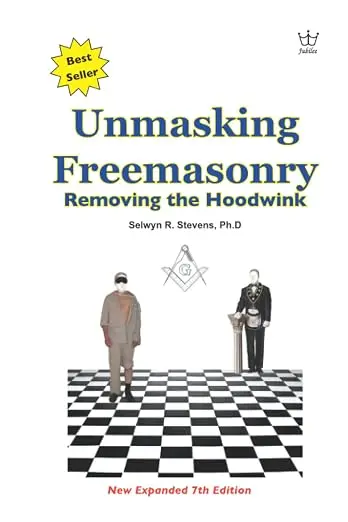
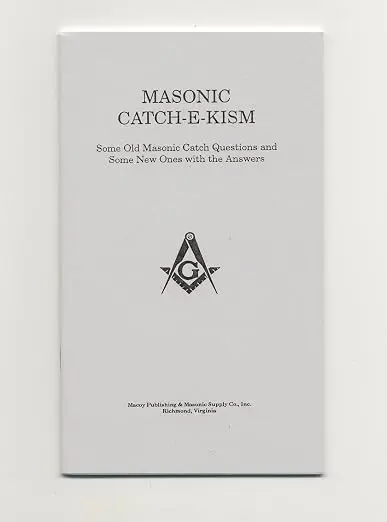
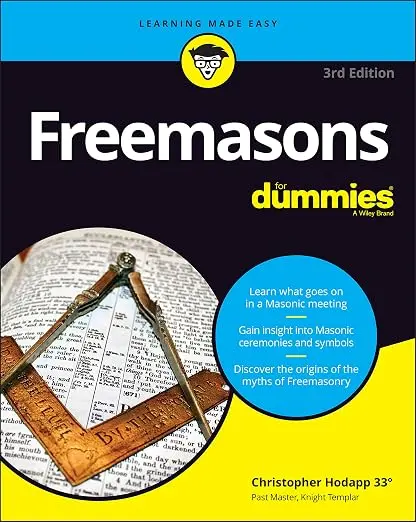
You do not have to take a fraternity’s word for what it is, and you should not have to take a conspiracy theorist’s either. The books lane here includes the standard histories and the notorious ones, labelled as what they are.
Start with what is Freemasonry for the plain version.